

Eat without the poison.
Scan any food, not just barcodes: a meal, a packaged product, a pear. ReelMeal works out how it was made and whether heated seed oils were likely involved, then gives you a verdict in seconds.


It's not just what you eat. It's how it was made.
Most apps count calories and macros. ReelMeal looks for something they miss: oxidation.
When omega-6-rich seed oils are heated, they break down into reactive aldehydes such as 4-HNE, MDA and acrolein. That much isn't disputed. ReelMeal asks where those compounds show up in the modern food supply, and it rates certainty honestly: oil cooked at high heat is a confirmed concern, while cold or shelf-stored oil gets a "Maybe."
Seed oils themselves aren't the problem. Oxidation is.
One clear answer, every time.
ReelMeal
Low oxidation risk. Eat freely.
Maybe Not a ReelMeal
Seed oils are present, but it's unclear whether they were heated.
Not a ReelMeal
High exposure to oxidized oil from heated seed oils.
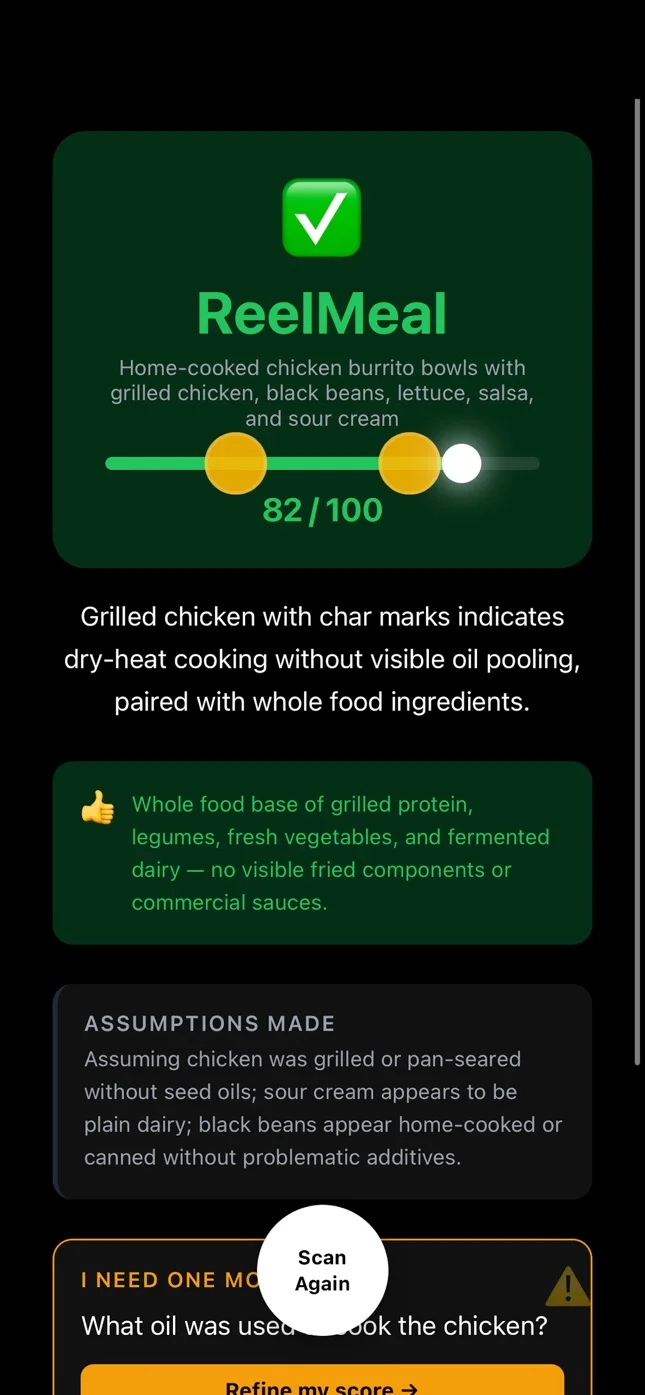
Want more than yes or no? The drill-down gives you a score out of 100, the assumptions ReelMeal made, and follow-up questions such as "What oil was used to cook the chicken?" that sharpen the result.
What it weighs, from most to least.
- 1. Oxidized omega-6 oilsFried foods and most processed foods. The dominant driver.
- 2. Shelf-oxidized oils & HFCSBottled dressings, margarine, soda.
- 3. Refined sugarsA gradient from HFCS to honey and maple.
- 4. Ultra-processingEmulsifiers, colorings, “natural flavors.”
- 5. Whole-food qualityMicronutrients, protein, fiber.
Butter, ghee, tallow and lard are neutral by default. Extra-virgin olive oil passes when it's unheated or lightly sautéed.
It doesn't tell you what diet to follow.
It gives you clarity so you can decide. You can even set how strict it is about seed oils.